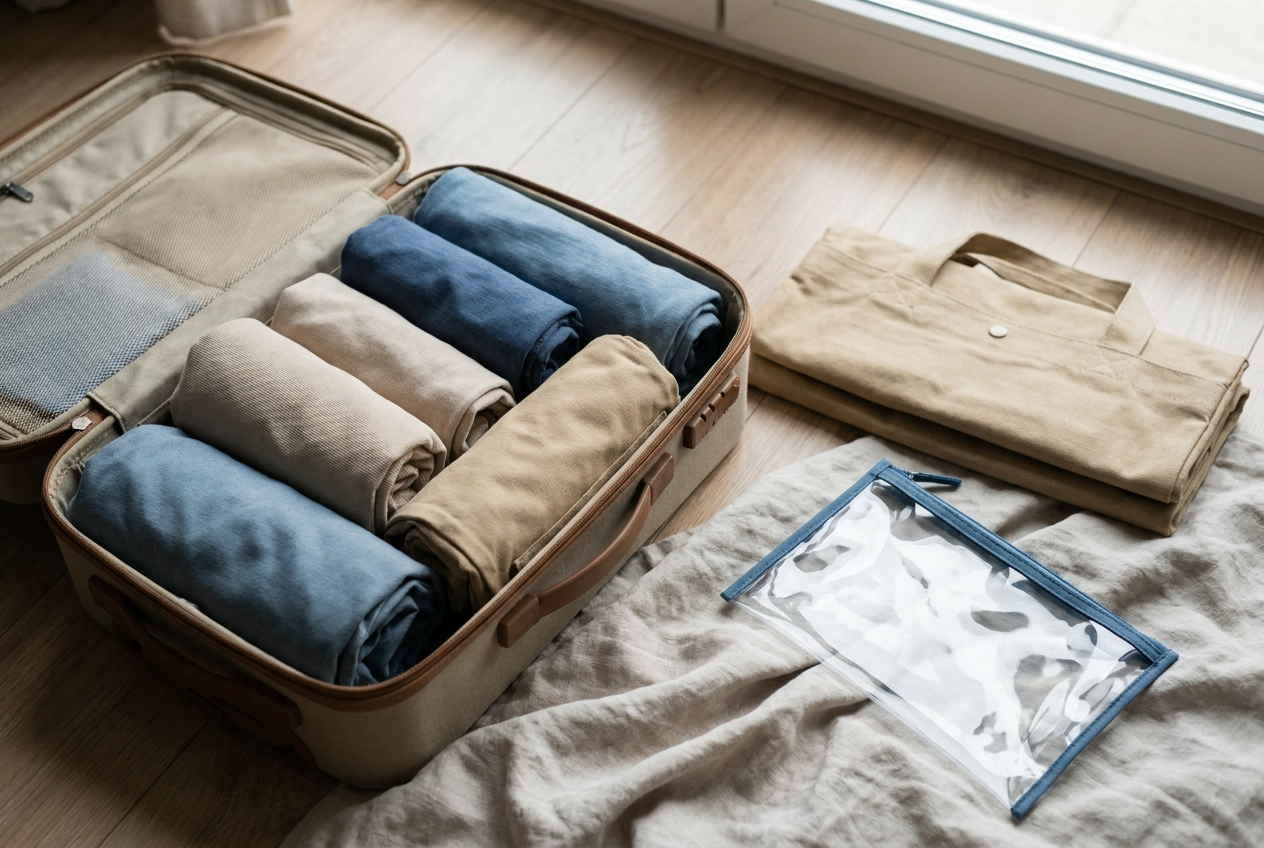
Hand luggage is the one bag you never lose — and the one you risk paying for twice if you get the size wrong. Choosing it well means holding together two things that seem to pull apart: respecting the cabin limits to the centimetre and, at the same time, using every litre of space inside. You don't need the most expensive model or the roomiest one in absolute terms: you need the right one for how you actually travel. Here are the concrete criteria, with a real selection from the catalogue.
A word of warning first: "standard" sizes and weights change from airline to airline, and in recent years the rules have grown stricter, not looser. What follows doesn't replace your flight's own rules — always worth checking — but it gives you the framework to avoid surprises at the gate.
1. Cabin dimensions, before anything else
Two formats cover almost every flight. The first is the "large cabin" trolley, around 55 x 40 x 20 cm, the one that fits in the overhead bin. The second is the "under-seat" bag, smaller, around 40 x 30 x 20 cm — by now the only one included in the base fare of many low-cost carriers. Deciding which category you want to be in is the first choice, before colour or brand.
The detail that catches everyone out: the measurement that counts is the external silhouette, wheels and handles included. Many bags quote the internal volume and "forget" the two centimetres of the wheels — which the metal sizer at the gate does not forgive. Always measure the total footprint and leave a margin: a full bag swells slightly.
2. Empty weight matters as much as capacity
A sturdy hard-shell trolley can weigh 3 kg empty. On an 8 or 10 kg limit that's nearly a third of your allowance spent on the shell. For flights with a tight weight cap, a soft bag or a light semi-rigid case gives you back precious kilos to spend on what you actually carry.
The choice between hard and soft isn't just aesthetic. Hard-shell protects electronics and fragile items better and stacks; soft compresses, slips into irregular spaces and forgives a couple of extra centimetres when the bin is already full. If you often fly light and with things that aren't delicate, soft is almost always the smarter pick.
3. Inside organisation: where volume becomes useful
The stated volume means little if the inside is one big sack. Separate compartments, retaining straps that hold the stack of clothes in place, reachable outer pockets for documents, charger and liquids: these details are the difference between packing in ten minutes and redoing it three times.
This is where accessories come in, often worth more than a bigger bag. Packing cubes divide by category — t-shirts, underwear, cables — turning chaos into stackable blocks; a dedicated pouch keeps shoe soles away from clean clothes. A few francs that change every departure.
4. Wheels, handles, zips: where it actually breaks
Moving parts are the first to fail, and the least repairable. Four spinner wheels roll better down the smooth airport corridors; two traditional wheels hold up better on pavements and cobbles and protrude less. Neither is "better" in absolute terms: it depends on where you actually drag the bag.
When you can, test the telescopic handle: it should lock in place without play and without wobble. And look at the zips: the sturdy ones run without forcing, and they're the point where, after a year, a cheap bag starts to let you down. That's what decides whether it lasts three trips or ten years.
The picks
A few real products from the Hand Luggage category to start from, each for a different use:
- Bombata E00796-13 cabin bag — compact cabin trolley
- El Ganso Eclipse travel bag 50 x 29 x 22 cm — soft, for the weekend
- Luggan InnovaGoods packing cubes, 6 pieces — organise by category
- Doshen InnovaGoods travel shoe bag — soles away from clothes